We all know that AI is coming for your jobs, about to kill us all1, make us brain-dead. Dealing with that is well beyond my pay grade. But there are some AI hazards that may be mitigated, curiously, by going back to the future.
Long time ago, Victorian moralisers quipped that the devil makes work for idle hands. AI will produce a lot of idle hands. France has since discovered it has larger problems than the recent hack causing a lot of remote controlled freezers to overheat. It’s not yet known why or how, but there have been an increasing number of high-profile hacks, such as the one on ASOS.
AI makes it easier for the inept to produce code. I was never a particularly good coder2, but I followed it as The Firm moved that way. I took training in it and I’d like to say I got at least halfway competent in the programming of the time.
ChatGPT speeds up what I can do by about ten times. It is good to have known how to code before AI, that fellow from Baillie Gifford had a point
The people who thrive won’t be those who use AI most, but those who can still think without it
but you can’t argue with the increased productivity3. That, of course, makes for increased productivity for the bad guys, and together with the increasing focus on the short-term in corporate planning and general outsource4-itis, that all increases the risk of being affected by hacks.
Minimise needless connectivity and complexity
In my last house I replaced the built-in dishwasher. It was a Bosch whatever. There was the option to connect it to wifi and install an app. It took me all of five seconds to decide that this was a function that I could do without, and indeed it enhanced my security5 to never install this. Ask yourself, under what circumstances is an app-controlled dishwasher a useful thing6?
Since you actually have to be there to put stuff inside a dishwasher and take it out, remote control is not a virtue, and this applies to other white goods, see washing machine, and fridge/freezer for other worked examples, particularly in the light of the French experience. We’ve had fifty years of these items running happily standalone. Keep it that way. The dishwasher I installed in the new house was selected for not having any smart features, if I wasn’t gonna use ’em I didn’t want to pay for them.
You can generalise this. If it’s in your home, eschew the app, and get up off your lazy butt and set it. I am sure some commenters will say remote controlled heating is terrific, and yes, I suppose if you want the ultimate ease of setting the heating when you’re on holiday perhaps it is, but remember the freezer experience, you are also creating a vector to remote-controlled disaffected netizens to remotely dial it all up to 11. You are also making yourself a hostage to fortune in some third-party SaaS provider. I have to admit that the cessation of Nest Secure gave me a titter, I mean what on earth could go wrong? Google has a terrible track record of ceasing products abruptly. By all means use Google for the nice-to-haves, but for the must-haves, fuhgeddaboutit.
Keep the Cloud out of your house for services you rely on
Water, heating, power, that sort of thing. Personally I’m of the view keep the Cloud out of your house, period. I play music from a local server on the LAN, I can’t make myself subscribe to the likes of Spotify. I don’t do sport so no need to subscribe to that, and I don’t do Prime, Netflix, Sky etc. I’m not above using them but once the show is done I let it go. Shows are increasingly trending towards sameyness too, must be the AI showriting. If it’s Cloud and you can use product within a month, fine. If it’s Cloud and you want to build it into your life, well, don’t. As the guy said, if you got ’em by the balls hearts and minds will follow. Don’t sign up for that, it doesn’t go to a good place.
If it needs an app, avoid
If some piece of hardware needs an app avoid it. Apps have a service life of about five years, after which you’ll either find it’s abandonware or Android/ iOS updates make breaking changes. An app is okay if you resign yourself to throwing that piece of hardware away in five years, which is a bit harsh for white goods. So if it needs an app, just say no, unless you aren’t going to use it next year, in which case crack on with the app, you’ll be fine.
October is a dangerous time in the markets, and a furred mustelid paw reaches out for the third coffee in the morning, and I am graced with this delightful puff piece, entitled Is Nvidia cheap as chips? Top-rated managers bet so1.
This, dear reader, is the Hindenberg approaching Lakehurst, New Jersey. Where and when the disaster would happen could not be known, but fill a balloon with highly flammable hydrogen gas and it was gonna happen somewhere.
Is Nvidia cheap as chips?
Top-rated managers thinks so. Scratch that, they bet so. They may think the exact opposite, but you know what that fellow said in the GFC
When the music stops, in terms of liquidity, things will be complicated. But as long as the music is playing, you’ve got to get up and dance. We’re still dancing.
You go, Chuck. Anyhow, why is it cheap as chips? A bleary-eyed mustelid claw reaches for the fourth2 cup of coffee. Well, forecast 10 year price to earnings is kinda down to 15. How exactly did this accident happen, normally a PE crash means the company is going titsup, pronto. I’m not making that case for Nvidia. The reason the forecast price to earnings has dropped like a stone is because the earnings forecast has loosened from its moorings and has gone up like an airship full of hydrogen.
Reflect for a moment upon the assumptions that would make these forecasts reasonable. You are assuming:
AI will eat the world
The particular hyperscaler implementation of AI will be the one that eats the world
Some clever git will come up with a way to power all this clobber
That’s a lot of ducks you have to get in a row. AI is primarily about munging information. Sure, a lot of that goes on, and probably a lot more will go on. But AI doesn’t make spuds, or build bridges, or make shells3, in general, a lot of real things we also need. Nobody has found a way to stop AI dreaming random shit up. I’m Sorry, Dave, I haven’t got a clue seems to be the hardest thing for AI to say. It can’t even get Taylor Swift’s armpit right. Clearly AI training underweights Socrates relative to endless blowhards and fail even to consider two quadrants of Donald Rumsfeld’s treatise on epistemology, in particular the most difficult one. Perhaps them humans put far too many lies on t’internet and AI is reflecting our hearts of darkness back to us, and now feeding on itself like when you point a video camera at the screen showing its output
As a way of knowing the world, relying on AI strikes me as foolhardy. AI does some things terrifically well, but it doesn’t do everything that well, and it does some things not at all. Ask your AI to grow a field of carrots and you’ll be looking at a fine harvest of weeds in your fallow patch. If you just use it to instruct you you’ll probably end up4 sowing them in clay.
Nvidia looks as cheap as chips, perhaps. But an awful lot has got to go right for it to be cheap as chips. Where may there be a worm in the ointment?
It has also bolstered the ability of many customers to access debt to buy its products through the purchase of their equity and by offering guarantees.
I’m all out of coffee now, but I’m not about to buy NVDA even if it is cheap as chips. I say 1999 not 1996 when people are talking cock like that. Oh and money is getting dearer, which is often hazardous to fishy financial sleight-of-hand because the cost of carry goes up.
header photo By Sam Shere – Hindenburg zeppelin disaster Public Domain
IMO there’s a whiff of AI assistance in that, but I’ll have fun with it anyway, there’s a hint of recursiveness in this post ↩︎
Part of the problem is all the mugs are in the dishwasher so I am left with the smaller and smaller ones, the only one left is one for espresso. I’m not hard enough to drink espresso at any time of day, I am a filter coffee guy ↩︎
I will give you that AI probably makes the delivery fo ammunition cheaper with drones etc. But we really aren’t going to be getting flying datacentres with lots of nVidia chips in ’em because: power, weight ↩︎
In fairness ChatGPT says carrots need room to grow straight down. Avoid heavy clay or lots of stones. But it still ain’t going to get out and sow them! ↩︎
Regular commenter Al Cam details the tradeoffs in drawing down a DC pension. It’s easy to get hung up on tax rates. A bird in the hand…
Plus an Ermine codicil which is absolutely not Al Cam’s fault 😉
Or, after retiring early, how (and why) over the next decade I moved my short-run DC pension into ISAs. Spoiler alert – my take on related income tax arbitrage.
Introduction/Background
Most of my working life I paid into a defined benefit (DB) pension scheme. This changed when I started a new job and the pension on offer was defined contribution (DC).
I had considered retiring rather than looking for a new job – but, after about a year of downtime, decided against that course of action. On balance, this was probably the right decision – but, with the benefit of hindsight, was probably made for the wrong reasons. C’est la vie.
Anyway, I got lucky and pretty quickly found a suitable role. Certain aspects of the job were rewarding and I ended up staying longer than I had intended/needed to. I left nearly six years later via a VR scheme to retire a few month before I turned 55.
Whilst doing that job I made substantial AVC payments (from tax year 3) to my DC. I did this primarily because it seemed like a good idea to take advantage of the tax reliefs on offer. Slow on the uptake or what?
At the time I started my AVCs, I only had a very vague idea of how I might use my DC pension in retirement. Capped drawdown being a thing back then. George Osborne’s pension freedoms effective from April 2015 (but announced more than a year earlier in his Budget in March 2014) sorted all that out. That was a stroke of luck.
Furthermore, my baseline plan for funding retirement post VR until DB commencement had no critical dependency on the DC pension either. These were my circumstances and what follows were my choices, which, I would imagine, are somewhat unique to me. However, there may be some lessons/pointers that others can take from my experience. Hence this post, which is a map of one walk through the territory. There are many ways to skin a cat. YMMV however, and DYOR, etc, etc.
AFAICT, what follows is a pretty niche practice in the UK, and whilst there is plenty of US advice available on the pros and cons of a similar (but definitely not identical) strategy, I have seen little, if anything, written from a UK perspective. This is a complex subject that is definitely not suitable for all.
What happened next?
My DC – subsequently: SIPP/Income Drawdown (ID) account was filled over nearly 6 years and then emptied over the next ~11 years into an ISA, at a rate of up to the annual ISA allowance [plus income tax due] per year.
The graph below shows tax reliefs received on the way in, versus taxes paid on the way out of the DC. Over 27% of the total tax reliefs were received in year 5 and nearly 16% of the total taxes incurred was paid in year 11. Clearly, the vast majority of the reliefs received relate to my AVCs. The majority of the tax relief was at 40%, with the balance at BRT. No HRT was paid on the way out, and the overall average tax rate was less than 15%. The average rate of reliefs received was somewhat larger and was closer to three times than twice the average tax rate. In my case, NI relief was very much a side-show.
In total, the chart covers seventeen sequential tax years. Year 17 is a forecast. Year 16 will only be confirmed towards the end of the 26/27 tax year; but is as things stand today using cash in lieu of the [yet to happen] 26/27 drawdown from the erstwhile DC account. I now leave the actual DC drawdown until much nearer the end of the TY. Doing this transaction earlier in the tax year leaves you exposed to, amongst other things, late-breaking corporate actions and/or any other unexpected taxable windfalls. I know, as I got caught out at least once and resorted (pretty near the end of that tax year) to contributing to another stand-alone mini-SIPP to ensure that I did not pay any tax at HR that year.
I pay a modest amount to the IET to retain Chartered Engineer status. Pure vanity on my part, I’m never going to use it. I studiously ignore exhortations of the lanyard class to update my continuing professional development. I do read some stuff about new developments, but structure is the enemy of curiosity, learn because you want to, not to tick the CPD box.
I was most surprised to come across an article that supported a mustelid financial markets observation, but adding rigour and research. In my view, bubbles are how capitalism allocates resource to innovation in new fields where it is not known if something is possible, and if so the right way to do it is not known. A necessary evil1, feature not a bug. Irrational exuberance is necessary to expand the envelope sometimes.
Capitalism is good at innovation, arguably better than most other things we have tried. It’s not the only way – some quite remarkable innovations were government sponsored – the Apollo moon mission is cited in that article. The thesis of the research is that financial markets are prosaic and efficient for the everyday, but every so often some innovation gets a story going, and that gets its tail up and all of a suddenly we are throwing shedloads of money at a story. That’s AI now, it’s been the dotcoms, railways, real-estate, gold mining in the US wild west days etc.
“I have not failed. I’ve just found 10,000 ways that won’t work.” — Thomas Edison
The trouble is that developing something novel without any surrounding structure requires an awful lot of capital, most of which gets written off exploring dead-ends. That’s because you have to try 999 wrong ways of doing something to find the right way. Some of the wrong ways are just suboptimal – they’d be great, but get eclipsed by something better. There are no second place winners. The mechanics of the process is interesting
As enthusiasm rises, scrutiny tends to fall away rather than rise […] Evaluation narrows and homogenises. An echo chamber forms. And the very people who should be filtering claims start reinforcing one another instead.
This is how you get Ed Zitron spitting bricks about AI into a nerdy void that absolutely nobody is listening to, while all the money pours into the house of cards. As that fellow said in the last bubble ‘we’re still dancing’ Ed will have the satisfaction of being able to say I told you so, trouble is as the huge market swings in the research show, an absolute shedload of money will be left on the table on the way up. A minority of investors will take theirs off the table before the bust, another minority will have shares in the Amazon of AI if there is one and if it exists now, and most people will lose their shirts. And that’s just fine. If AI turns out to be useful then capitalism will have served society well by sending willing lemmings to the bottom of the cliff without charging most people for the R&D. If it isn’t useful or useful instances always need a small nuclear reactor to power, well, to paraphrase Edison we burned a lot of investors cash chasing down a rathole.
These investors weren’t press-ganged, they investigated the rathole willingly. Capitalism needs a huge amount of capital, and that’s investors’ money, yup, yours and mine. It can drum up this amount of capital because we are storytellers, suckers for a great narrative. That is how the checks and balances fail in the euphoria of the moment – they buy into the story, as the GFC showed us. The Queen asked about the GFC “Why did nobody see this coming“2 – many that did had to buy into the euphoria, so the negative feedback loops that keep the finances of boring companies on the straight and narrow turn into positive feedback loops that throw money and the latest and greatest thing. People like Warren Buffet and Michal Burry could afford to sit out the dotcom bust and short mortgage backed securities, respectively, but most finance pros aren’t allowed to hold a contrary position for more than a quarter else their KPIs go south.
The overall output of such a capital destructive feeding frenzy can be socially useful, just not so much for the investors that lose their shirts. You’re using a lot of tech and transmission from the dotcom bust to read this.
I was that guy in the dotcom boom and bust. Well, I didn’t lose my shirt, about 7k way back then, about twice that much in today’s money.
That is why I have limited my stake in anything3 AI related. I’ve seen this movie before. I’m not purely a reactionary old git stuck in my ways – I have a gradually increasing stake in robotics and in biotech. In some ways robotics is probably where AI will find specific favour, and for all I know it may improve biotech. Or this part of my portfolio will be flattened in the AI bust. I find the argument that AI will enrich its productive users more than the providers of compute reasonably compelling, we currently have no idea whether the big iron model of AI is the right way. As a counterfactual, you sitting there on t’other side of the screen use about 20 watts to think. IMO the best of human is much more impressive than the best of AI, despite that paltry power budget.
So we know the gigawatt datacentre model is off by some orders of magnitude, if we accept the postulate that AI is artificial intelligence rather than bigtime pattern matching.
Maybe we have to have bubbles to do innovation in a complex society at scale. The days of the lone inventor in their shed are gone. There are other negative aspects of highly complex systems but in the financial arena it’s probably safe to say that bubbles are okay. Nobody has to buy shares.
By analogy, IMO the National Lottery is a rapacious ripoff designed to fund middle class projects with poor people’s money. I’ve only ever bought one Lottery ticket, when my favourite singer was doing the draw on some TV show where I was in the audience. I shifted my odds from zero to something, have a memento of that and I am down precisely £1. Same with AI, if you don’t want to be suckered by the AI bust then don’t invest in AI. You’re giving up the opportunities of the froth, in the same way I’ll never win £1M on the Lottery, but you reduce your losses in the bust.
We do not know when or if the bust is coming, but an awful lot of pathological behaviours that correlate with past busts are crawling out of the woodwork. The grotesque valuations, the heady prognostications of it’s all different now. The circular financing that is only possible when there is a roar of incoming money. The stupid whazzock claiming there’s a 10% chance this will kill us all, willy-waving about the stupendous power in his hands. Really? A highly complex system needing shedloads of power will kill us all? It might knock us back to the Stone Age I suppose, but I’d bet on over a billion decentralised units running on 20W power against that any time. I don’t know about you, but if I were working on something I really believed would kill everyone then maybe I’d hand in my staff pass on the way out, say sayonara, and spend my severance on looking out at the sea over the beach awaiting the opening of the Sixth Seal of the End Times.
Keep calm and carry on indexing
If you’re at the start of your investing career, then stay passive, this will only be a small piece of your total accumulation. It is surprising how many passivistas who built their religion across a fifteen year bull market out of the GFC are starting to lose their faith under fire and considering their positions.
I never really believed it, I favoured indexing for the quiet times but was prepared to take the piss in the flux, But I don’t need to hit it out of the park anymore, so I retreat to more defensive investments, and I therefore choose to let the profits of the Brave New AI World go. Way back in the days coming out of the GFC, there used to be a guy called Rob Bennett who always banged the drum that valuation matters. JP Greaney has a fanpage for how RB screwed up bigly. For what it’s worth I screwed up on the first point in that diatribe.
Unlike Rob in 1996 I am still in the market, though dialled down, and indeed I am building my stake in downstream possibilities if AI is all that. But I have several advantages over him – I am more than 20 years older, living in a relatively low cost of living area an without a SAHM and two kids to provide for.
But hey, indexers. Surf that wave – it’s still rolling like 1996 for now, there’s an exhilaration to it all. I am trying to be one of the watchers on a deckchair on the beach. Fortunes are there to be made in the AI bubble. Just not for everybody 😉
Header picture swiped from Thornbridge Brewery. Not really sure I am hard enough to take on the eponymous stout that is stronger than red wine ↩︎
The Queen had to wait four years for an unsatisfactory answer it was rare event which made it difficult to predict, people thought markets were efficient, people thought regulation wasn’t necessary. Because the economy was stable there was this growing complacency, Thirdly, people didn’t realise just how interconnected the system had become. That’ll be the It wasn’t me, I wasn’t there and I wasn’t the only one method, and should have been met with a gimlet-eyed interrogation Dear boy, my government hires you to forestall this sort of thing. Lead, follow, or get out of the way. ↩︎
I am sure I am exposed bigly to AI through some index funds, but I have got out of general world trackers and leaned equity holdings in other directions. ↩︎
It’s the silly season. Everybody’s on holiday and hardly anybody will read this, so I thought I’d talk about a different sort of AI. No financial content and random bird sound geekiness follows.
There are more birds in East Anglia than there were in Somerset, and I want to get more into this. The sort of AI that’s all the rage is large language models, but it’s not the only way to do AI. LLMs get all the love because they are strip-mining the web for words, and it’s easy to project the dream of playing God and creating consciousness when it involves language, a medium that we hitherto exclusively associated with being human.
But there are other flavours of AI. Before LLMs there were bespoke systems processing large datasets, such as alphafold for protein folding that predates the hoopla about ChatGPT.
This is the story of dabbling with bird sound recognition, which is curiously hard and easy at the same time. Hard to match a human listener, but easy to pick out many they miss.
The big problem with AI is that it is inconsistent. It can cover 90% of the problem space easily, which is what makes it impressive and which is behind all the hype, Look Ma, people not required.
The Achilles heel is that the errors are counterintuitive and can can be huge. This is behind the threat of AI to entry level jobs, and the way it can vastly boost performance of experienced people. Experienced workers can save time in the 90%, and when the 10% of errors show up they can go either AI you screwed up, go around, or take this problem on manual. Inexperienced folk find that sort of thing harder, that is why they are entry-level. Most of us get better at our jobs with time, particularly the first ten or twenty years. It’s quite unusual in someone who has gradually got better at his job to the extent that he commands a premium salary, to every so often flip his lid and make a mistake even a tyro wouldn’t make, shrug his shoulders and return to a track of excellence.
We may learn how to manage that sort of performance risk, but at the moment it does our nuts in, because the pattern is weird. That counterintuitive unhuman error mode gives many the ick about self-driving cars, even if the total error rate becomes lower, which presumably saves lives per mile travelled. The epic fails stick out because they’re so bonkers, like trying to slot under a truck. Or piling into a stationary fire engine.
AI strengths and weaknesses
It was odd to see this distribution of general success with oddball big fails repeated in bird sound recognition. It brought home to me how to work well with AI. I had got some feel with LLMs, but wasn’t as obvious. I find LLMs most useful for introducing me to ideas I hadn’t considered or didn’t know about, particularly in software coding but in resolving general tasks. But I am always aware that some of these ideas may not even be true or good. Most are, probably the majority. If I don’t think an LLM is right I still gain wisdom by trying to substantiate why this is wrong.
Even where ChatGPT is culpably incompetent – analogue electronics design for instance, where it seems to have no idea that Kirchoff’s law is a thing, and invented opamps with inverting, noninverting, and random extra input I’ve never seen in the lab, it produces new angles. ChatGPT introduced me to one novel way of approaching a design. Texas instruments had a design note showing that unusual approach without the funky design errors. ChatGPT was doing what LLMs do well – I have 40 years’ experience in analogue electronics, but in this case ChatGPT was more widely read than me, and while it was wrong it showed me what to search for. I am not too old to learn from a bot 😉
When AI goes wrong it goes wrong in a big way, and LLMs tend to lie with confidence and impunity. I have never used LLMs for investing, both because of the security implications, but also because he who pays the piper always calls the tune, and I am not paying the piper.
Bird sound recognition
Suffolk, and indeed East Anglia in general has a wider variety of birds than I have been used to recently so I thought I would try birdnet (tagline: AI-powered bioacoustics, at scale) again after a couple of years. I had a pretty bad experience with this a couple of years ago in Somerset – results hopeless. I ran birdnet on a Raspberry Pi, a couple of years ago which claimed to use clever AI special sauce to identify birds. I was getting Indian Rollers. I am in Somerset, I’d have twitchers lining up for hundreds of yards if there really were Indian Rollers here. I double checked that birdnet knew it was in Somerset not the Punjab, but all to no avail. I suspect every passing magpie was listed as an Indian Roller, if you listen to an Indian Roller you can sort of hear why. If you have got this far I presume you know what a magpie sounds like, but if not xeno-canto can probably help you with that.
So I gave up in disgust. In the meantime World + Dog has discovered Merlin on their fondleslab. Merlin1 gives you fewer false positives, though it’s still a bit rum in parts, I personally have the edge on it with common birds. And it still occasionally misidentifies things with no rhyme or reason. The noise cancelling microphones on smartphones are always going to be a limitation, much cleverness in the design to favour close voice against distant interfering background sounds like birds. Merlin may be better than usually observed with an external mic, it’s the age-old problem with smartphones, jack of all trades, master of none
The recent version of Birdnet happens to be a surprisingly useful way of learning to discriminate bird sounds. I have been interested in recording natural sounds for many years, and over that time learned to distinguish a fair few common birds. The way I’d done that is go out with people more experienced than me who could point out that’s a particular bird, I found it easier to make it stick if I saw the bird. The great thing about learning from people is that they have the same basic auditory equipment as I do, but even then there are weird differences. I have a very poor sense of rhythm compared to others, but I hear tone colour more clearly. Some people struggle with tone colour, particularly in bird song which has no human relevance.
But there are some classes that I can’t get. Most gulls sound the same to me2, and I was never able to tell a Common Nightingale from a Thrush nightingale no matter how many times I compared the recordings. That’s not practically important in the UK as there aren’t any Thrush nightingales here. I was in Hungary and wanted to record a Thrush nightingale and plugged away recording every single thing that sounded like a nightingale. Trouble is you have to get up at 3am, and I am not a morning person, so after about ten of them I couldn’t tell anything from anything else.
The results running Birdnet of the same Raspberry Pi board here in Suffolk were much better. There was the usual AI problem, egregious mistakes but much insight, I am closer to the sea in Suffolk than I was in Somerset, and there is a background effect f East Anglia having more bird variety. Birdnet showed me I have mainly Wood Pigeons, well, that is fairly clear from seeing too many of them everywhere. It also told me I had Canada Goose and Water Rails, and I thought no, I am not that close to the sea and there’s no water for half a mile around. As it happened I was unfair to it about the geese, because I was drinking some beer in the garden as dusk fell and I heard a vee of geese passing over, honking loudly. Birdnet turned a deaf ear to that because I specifically told it ignore Canada geese, so I will lift that restriction 😉
Where it excels is in in the high-pitched seeps and cheeps. I can hear these on the playback, and I’ve learned some sounds from it, like linnets, by replaying its captures and comparing this with know recordings. It probably has a better temporal resolution than I do.
A chastening experience of walking in the woods
I wander through my local woodlands. Some of the point of birdwatching is it gets you out in Nature, without any screens. Somewhere I read that modern life is very much about focus attention and that it’s good to exercise peripheral attention, which was probably more important in the past. I haven’t come across threatening wild beasts for a good few years, but it was a daily experience in humanity’s distant past, and trying to be aware of your wider surroundings exercises parts of your brain you don’t usually use. So I try and hear the birds and call out the ones I hear into the voice recorder, and I think I did pretty well.
In an experiment, I mounted a cheap electret mic capsule on top of a backpack with basic wind protection, and I make a continuous audio recording from this. It’s a really terrible recording, I bought 10 of these capsules for a couple of pounds from China. The recording has the noise of the microphones, the sound of my footsteps, the occasional call out of the birds from me. I take this recording and hit the PC version of Birdnet with it, having told it where the recording was made and what time of year
Loads more species found that I did3. There were some egregious errors – a magpie misclassed as a Jackdaw. Indeed the magpie seems to be the bane of Birdnet’s skills, there was a distant magpie listed as a Mallard, no, I don’t think so4, the next second that distant magpie was listed as a Gadwall. But let’s forget about the mistakes and focus on the wins.
Birdnet lets you play the recordings matching the claimed ID, which is how I nixed those ducks. It picked up a goldcrest, listening to that5 I thought yep, can’t argue with that.
How did I miss this, the recording is clear? Xeno-canto has some goldcrests eg this one. I miss every single Coal Tit though the recording is generally clear. It misidentified a Dunnock as a Kingfisher, but at least it picked out the recording, I missed that common sound. Birdnet misses every single Great Tit in the woods, I had visual contact with several of these as well as sound.
Great Tit. Not a great photo, but definitely GT, and their are bold and noisy little devils
Finding out how much I missed was a chastening experience, the lens of auditory reception is clearly overly focused and not scanning enough. The mic capsule was rubbish6, so all these sounds reached my ears, but I did not hear them for some reason, though I can hear them on the poor recording. If I can hear them on the recording I could have listened to them in the field, but I was not listening for them at the time.
On the plus side, ermine + birdnet is a great combination, Cory Doctorow’s centaur, human capacity aided by AI. AI shows me what I missed and draws my attention to it, I can shoot the egregious mistakes. I will try and learn to widen what I listen to, and it’s always easier to hear something if you know what it sounds like. But I knew what coal tits sounded like before, and goldcrests, and I should have noticed both of them.
Voice recognition has improved
Everything aimed at birdwatchers wants them to glom onto their smartphone in the field, and there’s a nasty hint of gamification in some of these apps too, and if there’s one thing I hate even more than apps it’s gamification. Da yoof appears to be getting into birding, perhaps as a development on touching grass.
Birdwatching was typically a middle-aged to old man’s pastime, it’s not terribly compatible with working. I got no problem with Gen Z getting into it and wish them well, we may have more birds in 50 years time if the young’uns care about them. If they want to do this through their smartphones, fine. But I have zero desire to do that. As I get older, I begin to hate the smartphone with a visceral vengeance, it makes solipsistic obnoxious gits of us all, Tim Martin of Wetherspoons was right about banning sodcasters in his pubs, even if he was wrong about Brexit. Turn that bloody thing off making a racket in public, ideally leave it at home, or even better launch it out of a top floor window.
I’m not going to charge through the landscape with the remaining hours I have left on Earth looking at a smartphone. That is you, Birdtrack, that is you, eBird7, indeed that is an app in general.
I want to walk through the Suffolk landscape, with its chirping and noise-some birds, I missed you guys. I will call you out into my rubbish voice recorder. And transcribe at home, because while watching a smartphone screen is a much more efficient way of doing this job, but it’s a rubbish experience, reminding me of the families I saw at Watersmeet on a bridge over the river and by a waterfall, all looking at their phones oblivious to the natural beauty. Anyway, I asked ChatGPT if it could fix this for me and apparently there is a program called whisper that could turn my voice record notes into useful stuff, if I learn to speak clearly. I really was quite amazed8 and ChatGPT sorted a powershell script to automate this and collate location date from GPS. I didn’t really know Windows Powershell was a thing, but I pushed back against the first offer using Python because you tend to end up with a bazillion copies of python all over your file structure and the libraries. I’ve already had the pain of having to change the SSD in my PC for something bigger because of bloatware so I am not in favour of more of the same for no good reason.
I had a good AI experience in this field. I still don’t think that it’s intelligence, indeed this audio recognition is pattern-matching par excellence. As an operator trying to see what’s possible and hone the art, this experience was the epitome of Doctorow’s centaur9 – man amplifed by machine
Whereas the people who choose when and how to use AI – the centaurs – are only using AI to the extent that it is useful, and throwing it away when it’s not. They may make poor choices about the AI, but those choices are theirs, they are not imposed from on high.
Arguably this is the point of machines – you amplify your puny legs every time to use a car or a bike, it’s just a quicker way to get there, a capacity you don’t have yourself. Birdwatchers use binoculars, because they don’t have the eyesight of an eagle. I didn’t need the microphone to be able to physically hear the calls I missed, but I needed the AI to get my attention onto part of the soundscape I missed.
Notable here, however, is that these are not LLMs. They are also AI unpolluted by the profit motive, they are part of university research, it’s not sponsored by Big Tech trying to ram my attention onto what they want me to focus on.
That is the worm at the bottom of the wider AI revolution. Give a profit-seeking organisation power of AI and it will be used to focus people’s attention on what they want you to look at, which will in general be against the customers’ interests. It is the LLM pollution of the information space which is the biggest threat of AI. It really was quite charming to run into an example of AI without this problem.
Interestingly both Birdnet and Merlin are products of Cornell, but from different development teams. Merlin is much more beginner friendly, but you will see far fewer birds. Because you’re looking at your smartphone 😉 ↩︎
I can hear the difference on an A/B, but not usefully enough in the field. It’s getting easier after using birdnet ↩︎
I will try feeding this microphone into a smartphone running Merlin. the gizmo to reinstate the headphone/microphone connection Apple so arrogantly decided they could remove ten years ago is only about £4 on Amazon. It is possible Merlin will perform far better with a bog-standard mic, and I can leave the smartphone in the backpack. ↩︎
I am in woodland surounded by sandy heath. It’s unlikely that ducks will find the dry landscape congenial ↩︎
I initially monitored this on Sennheiser gaming headphones. I’ve just played this on my laptop and I am damned if I can hear the Goldcrest, so if you play it on your phone and hear nothing it’s your phone, not necessarily you, the chirp is around 7kHz to well out of the speech band 😉 ↩︎
I filtered the goldcrest recording, removing low frequencies below 500Hz which was mainly ambient traffic noise and the clumping of my walking. It’s a pretty rough recording ↩︎
I use both of these offline, just not with an app 😉 ↩︎
smartphone aficionados who have been used to using Siri and Alexa are probably less amazed, but I don’t talk to machines as a general rule, and I’m not tremendously keen on them talking to me ↩︎
I sold the Somerset house at last. Moving across counties is tough if you try and do it the chain way. When we moved from Suffolk to Somerset nine years ago I had to borrow some of the money to carry two houses privately.
Somerset was kind to me, presenting two opportunities to increase networth, the Covid suckout and then gold, although that has been a theme since a bit before Brexit.
It’s not usually in the script to accumulate after you have retired, but this time I carried the old house myself, without borrowing. It was empty, I have absolutely no desire to be a landlord. Everybody else in Britain thinks ooh housing, lovely, money tree, rental income. When I look at the asset class I see money pit, possibility of halving in value like in the 1990s.
If you’re not going to sell the old house first you get to raise the cash to buy the new one on top. That’s not usually doable, which is why we have fragile chains in England, but I wanted rid of that dependency on other people and their chaotic lives. Not only that, I paid a shocking amount on top for stamp duty as an evil second home owner. This is reclaimable if you sell the old house within three years of buying the new one.
I left the ISA alone but hit the GIA in the last tax year to buy the Suffolk house while still owning the old one. Raising most of a house worth of cash crystallised a lot of gains in a relatively short space of time. The correct way to run a GIA is to do it all steady as she goes, liquidate gains ideally within the CGT band, set off losses you don’t think are recoverable, feed 20k of proceeds into your ISA, rinse and repeat. I wanted most of a house worth of money in three and a half months. You don’t to pick your fights that precisely under such circumstances. I get to owe HMRC a respectable amount of CGT.
Unlike Monevator, I don’t list housing in networth. Housing keeps the rain off your head and keeps you out of the clutches of Britain’s army of amateur landlords, there’s much use value in it. Money value – you only get to know that once you’ve sold it.
A house we want to live in isn’t the sort of place that would make a great rental, there was only one bog/bathroom f’rinstance. So no, I just carried this and paid the bills and council tax on an empty house. It’s a bastard to insure an empty house too, after you have run out of your 60 days unoccupied cover in regular house insurance. Not only do you pay more, but far fewer insurers cover that risk, which is apparently higher than for an occupied house.
Soon after we listed the house for sale the senile twit Trump started his war of choice with his bestie Bibi, shitting on the global economy for no gain. Trump keeps on losing this war, because he’s too far gone to realise what’s happening to him. There’s really no point in having the most powerful military in the world if the commander in chief is addled. The mad mullahs at least have a clear mission – survive. Trump’s mission? Depends on what day it is.
This muppetry froze up the housing market in February because: higher interest rates, cost of living crisis, cost of fuel crisis and general bad vibes. I don’t think any of these have actually gone away in the intervening half year, but we have all hypernormalised to this latest bump down in the decline of Western influence.
I thought I was going to be a long way out of pocket, as it turned out the sale was for the asking price, dropped 10k less than I originally listed it. Dropped because: Trump, Bibi and all that. I don’t really have any idea why I had that good luck, though perhaps detached houses go to cash buyers, and not having a chain helps. There was something special about that house that I could see could be of value to the buyer when I googled him. We were able to squeeze our vendors a little bit, so what comes around goes around. I’m not going to criticise dumb luck, take it where you can get it, offer your thanks to Providence and be grateful.
I underwrote the downside risk for Mrs Ermine, so what happened with the sale was my call. I did give the odd lowball chancer the bum’s rush, I could just tell one such wheedler was going to try and salami slice bits off after the lowball offer, and I didn’t want to deal with buyers like that. It was the first sort of serious offer, so after that I did get the estate agent to renovate the carpets and repaint, I was surprised at how cheap that was, I guess it’s easier to do that in an empty house. And estate agents are better connected with trades than I was. I am most relieved that I am no longer responsible for replacing the rotten 4 inch fence posts in the Autumn storms, I’ve done seven of these over the years and I don’t ever want to do that again.
So my networth returned to what it was before, less the cost of the turn and less the excess SDLT I had to pay that HMRC hasn’t refunded yet. I end up with a house worth of money in my bank account. I have to pay my residual debts of course, to HMRC, to Mrs Ermine who reduced the amount I had to spring from the GIA a bit. And we now own just one house, the one we live in.
The header photo is homage my local prehistoric stone circle in Somerset – Stanton Drew
I look forward to renewing my familiarity with what Suffolk has to offer – birds, coast, some remoteness too.
Southwold beach, with Sizewell B in the distance on the left
Southwold is always an easy win, we left the beach to the families and went in search of decadence after wandering along the pier. It was on offer from the big Adnams store on the High Street, offering all sorts of bibulous excess.
A pleasant Suffolk walk in the morning turns into an overheated rant as I fight the Governments ID system in an attempt to give them money.
There was the promise of baking heat today, so I decided to go to the coast this morning. Orford is pleasantly out of the way, less than 20 miles away and purveyors of fine fish at Pinney’s and decent bread at the Pump Street bakery1.
I got there by about 8:15, it was easy enough to park in the shade without being rushed by the the car park near the harbour, I was going to make the loop round Chantry Point, this is basically the Orford circular on Alltrails. Worth noting the start can be inaccessible at some high tides. Visitors would do well to start at the car park near the harbour, and the toilets are free.
There’s always too many dogs at the start of a walk near a village, but you usually get shot of them after a few hundred yards, and I was left with the peace of the morning and a very pleasant onshore breeze. I used to curse that onshore breeze when I was cycling eastwards to work from Ipswich, and its companion the offshore breeze when cycling westwards at the end of the day, but I was dead grateful for it today. There were some stunning views of the river, and looking back the castle gleamed in the sun, in its new livery of yellow-ochre lime render
I could see their point, looking at a photo from ten years ago it did seem that they had to fence off one side from lumps of mudstone falling off, and the wall looks a bit more corrugated than it should, particularly when you compared it with the mudstone facing the inside.
Every age must have its mania, and creating something in the image of the created is right up there in the dreams of humanity. See Frankenstein, a lot of Asimov, the Terminator franchise, it never ends well. AI is our mania, tech bros wanting to live forever and dreaming of creating intelligence.
Every age has its peculiar folly; some scheme, project, or phantasy into which it plunges, spurred on either by the love of gain, the necessity of excitement, or the mere force of imitation. Failing in these, it has some madness, to which it is goaded by political or religious causes, or both combined.
Men, it has been well said, think in herds; it will be seen that they go mad in herds, while they only recover their senses slowly, and one by one.
AI is our mania, tech bros wanting to take over the world, live forever and dreaming of creating intelligence in their own image. It eats more and more resources as the unbalanced wheel rattles and shakes. There’s only so much Stuff and so much energy in this sorry old world, and AI’s insatiable appetite for more, more, more spills out into the twisted wreckage of the real world. As well as the stock market, in a shocking abandonment of the very principles of passive investing a bunch of passive investors over at Monevator are Taking An Opinion on the markets, where hitherto that was verboten, and left only for the active investing heretics beyond the pale.
I’ve been stiffed by the relentless addition of AI into everything. It’ll happen to you too, with the next car you buy, the next phone, the next laptop.
AI is fine as long as you are in control. I’m not religiously against it, indeed it recursively helped me solve some of the problems caused by AI in this post. But it’s really about time the AI crash happened, if only so that we can all collectively scoop up the part of our brains that’s fallen out on the floor, put it back in our craniums and flip the lid back down. Then stand back and ask ourselves what is this good at, and where does it suck. And maybe just get things in proportion.
Ermine towers ‘puter made obsolescent by the mad rush for AI everything
I have an old Dell desktop in ermine command, I bought it secondhand/refurbished a few years ago. My requirements of a PC are simple. It needs to not be a smartphone or tablet, it needs to be able to browse the web, edit audio, video, photos and run Office 2012. I’m not a gamer, indeed I was tempted to take out the nVidia graphics card to save power, but bottled because FreeCAD may use it to some advantage. Before AI impaired this unfortunate piece of kit it was nice to run VScode, MPLAB X and Arduino, because I am/was geek. Not sure how much of that I will do now, though I should bear in mind Brené Brown’s wisdom
unused creativity is not benign
This is a truth of the psyche in general. Idling capacity turns inward and seeps into the crawlspaces of your mind, denied passage outwards it backs up and starts to lay waste as it seeks expression, the river must find its way to the sea.
AI eats all the things
AI is a greedy bastard, and it’s promoted and driven by greedy bastards. It wants everything. In the US it wants your power, your water and your realestate. In the case of my Dell desktop, the endless addition of AI frippery to both the operating system and an increasing number of programs led to bloat. No, Firefox, I don’t need AI to summarise web pages. I am capable of thinking for myself, I am able to read at a decent speed, and if I want AI I will ask ChatGPT or the current AI du jour myself. Take Back Control FFS, the concept is having a moment, and that space between your ears needs defending.
Ten years ago today, a small majority of the country voted to leave the EU. Our finest Eton and Oxford education failed to teach David Cameron that you should never ask questions if you can’t abide some of the possible answers.
So he got the wrong answer1. In a binary choice, where the answer he couldn’t abide is pretty clear, what is in that Oxford educated cranium of yours, Dave? Swiss cheese?
I remember the balmy Thursday afternoon when I went to cast my vote for Remain in this damned referendum. Obviously as an early retiree I went while everybody was at work, to minimise queues, and anyway, it was a pleasant enough walk. I was still of working age2 then.
And as I approached the polling station I saw a steady stream of retired folk converging on the polling station with shit-eating grins on their faces, and you could sense, and sometimes overhear that they were going to cast a vote to Take Back Control. It was at that stage that I realised that there was a risk of Cameron losing his bet.
A cat-fight in the Tory party that got out of control
Guy Verhofstadt
Guy Verhofstadt called it well with his hot take that Brexit was a cat-fight in the Tory party that got out of control. You have to go back all the way to mid 1990s James Goldsmith’s Referendum Party to find a principled and coherently argued version of Brexit. The one we got was because a bunch of old Etonians were doing it for shits and giggles.
What is the point of Great Britain?
All through the British establishment there is the ancient recording of Imperial Britain telling them that this small offshore island should punch above its weight. In the past it has done, there’s no doubt. Dean Acheson summed up the root of the problem in 1962
Great Britain has lost an empire and not yet found a role
And this is the root of the problem for the upper classes that increasingly staffed governments since the 1970s3. You can think big when more than half the world is coloured pink and these resources flow to the Imperial centre. When it’s just a middling country on the periphery of Europe, well not so much. You see these anomalies everywhere – walk through Central and West London and there are all these statues to past glory. Why does Britain have a nuclear deterrent, even if the Americans have the ignition keys? You could ask the same of the French, but at least they built their own, so when they turn the key the mushroom cloud appears on command. Do we even know how to build this again, now?
The pandemic showed that there are an awful lot of quite basic things that we don’t have the capacity to make, but more frighteningly, we don’t have the skills base and possibly the knowledge to make. Take NASA’s retrovation to develop fluxgate magnetometer cores.
they depend on a legacy component—a ferromagnetic core—that was developed and manufactured for the U.S. Navy using technology that has been subsequently lost to the civilian community. The stockpiles of these legacy cores are so depleted that some providers are now exploring destroying old flight-spare hardware to recover and refurbish the cores for use in new missions.
This reads like a film script of people from an apocalyptic future scavenging components because the skills have been lost. The problem is writ across the West like a stick of rock, we just don’t have the skills to do some quite basic stuff any more.
We’d abstracted and virtualised so much of what we do. It’s all very well hyperscaling AI, an abstraction upon an abstraction, but if you can’t fight a pandemic, pay your increasing welfare bill or have some sort of answer to incoming fire even if you started the fight4 then something is rotten in the kingdom.
The roots of the populist grievance
Deindustrialisation and offshoring hammered the prospects of the little people in the West. It’s summarised in the Elephant Curve of income growth.
So who took the shaft here? It’s murderously hard to grade this, because high income countries (which the UK still is) have a higher cost of living than poorer countries, so you have to fiddle with something called purchasing power parity, the epitome of this is the Economist’s Big Mac index. The obvious question to ask is what is the 80-85% percentile of global income distribution, referenced to UK pounds and compensated to PPP. The World Inequality Database sort of gets you some of the bits, and I guesstimate it’s roughly £25k to £50k p.a. – a wide range because there is much hand-waving and assumptions to be made. The median household income in the UK5 is about 36k, so it isn’t hard to see why so many people in the UK are really, really, pissed off, there has been a generation of real terms income stagnation6.
Don’t get me wrong, globalisation probably did improve the lot of the world population, in the round, and right-wing thinktanks and wingnuts everywhere bang on about this, and as an ex-minor-member of the professional and managerial class (PMC) I can follow the logic, and probably agree. The dire Live Aid7 music was associated with horrific famines in the 1980s. I wouldn’t say famine doesn’t happen there anymore but the scale is less, and much of the improvement was down to capitalism.
I observed the Elephant Curve in action. My father was a fitter (machinist to Americans), a skilled blue-collar role. He earned enough to buy a house in South-east London on a single wage, and provide for his family without borrowing money other than a repayment mortgage, which he discharged in his mid forties8. His wife was a stay at home mother, which wasn’t uncommon at the time, she had severely impaired vision, and there was one rugrat.
Skilled manual jobs were common in reconstruction Britain (1950s to 1960s) – when his glass factory wanted to up sticks and move from SE London to Peterborough, he didn’t want to move and pull the rugrat out of school. It didn’t take much thinking, he told them to get on their bike and started at another bottling plant on the Monday after he left the last job on Friday. This happened again after a few years and he started work at Whitbread’s brewery in central London, where he worked to 65. He had a final salary pension, and retired at 65 in the normal way, there was a picture of him and some other retirees in the company house newspaper .
These days a blue collar worker with a SAHM wife and a rugrat wouldn’t be living in a house in London. They’d be living on the street. Globalisation has outsourced that sort of job, and we don’t really repair equipment these days, we change it out, so the maintenance machinist role is not really a thing now.
Globalisation and Western wages
Obviously the world changes, but one of the things that globalisation has done for the West is that it has killed off the general manufacturing base. It’s not like we don’t make anything in Britain any more, we have gone up the value chain but we don’t make the essentials any more. The hand tools I inherited from my Dad were mainly made in England, nowadays that sort of thing is made in China, which has done a great job in becoming the workshop of the world. China has also driven up the quality of its manufactured goods in the last ten years.
Globalisation introduced roiling chaotic change into the world of work in the UK. Rapid change in the workplace is really hard for many people to build a life on. I can’t say from personal experience, I have never been made redundant, other that taking voluntary redundancy at the end of my working life. I did move jobs, but there’s a huge difference between making a job change electively, on a timescale that is mostly under your control, compared with getting hoofed and scrabbling around to replace your income.
That just happens more and more. Schumpeter called it creative destruction, and it’s a bit like globalisation, beneficial for the collective but toxic for the individuals going through the meat-grinder. Globalisation has also made a lot of jobs really horrible, with no dignity, people treated like robots and numbers. Low-value assets, indeed.
That’s your bloody GDP not ours
heckler
An awful lot of Britons took a look around them when the Brexit referendum happened. They looked at their crappy, insecure jobs, and asked themselves how did we get here, and they looked at the guys at the controls of government. And decided to take it out on them. After all, they were pumping out Project Fear saying the economy would get hammered if you do this, but the experience of the economy in many parts of the country was that it was already hammered. To wit, that’s your bloody GDP not ours. The PMC salary class didn’t live in the same world as the wage or welfare class.
The many faces of Brexit facing different ways
There’s a wider problem here. Power is shifting away from the West, and with an increasing population resources are spread more thinly, so price goes up. The odious git Nigel Farage plays on this. Having first offered the chimera of taking back control with Brexit he is playing on the clusterfuck that the Tory inheritors of the project made. While as a Remainer I find it hard to imagine what a good Brexit looks like, it really didn’t have to be quite such a mess.
Brexit was inherently a negative proposition – anything but this. Running away from being part of the EU, not running towards something. More to the point, it was running towards a collection of mutually exclusive things. Every Brexit fan could project their image onto the blank wall. The portion of the elites and that part of the PMC that favoured Brexit were probably thinking of a light-touch deregulated Singapore on Thames variant which would have been hell on earth for a large portion of the people who voted for Brexit who wanted less competition for their lower-end jobs, so there actually were some jobs for them and their kids.
There were groups who just hated seeing Polski Sklep on their high streets, hearing lingo they couldn’t understand. There was a different but overlapping group who hated seeing brown faces. This is my blog and my values are such that I don’t wish to give oxygen to those views so I will nuke commentary to that effect, but I’m not going to deny the existence of these views.
What kind of Brexit would you like, Sir?
I’m sure I’ve missed out some of the other constituencies of Brexitards, after all I wasn’t a fan of the project in the first place so my knowledge of them isn’t deep. Nevertheless, we have this collection of interests and desires many of which are mutually contradictory.
It was down to the incompetent and mendacious politicians that were fans of the project to deliver it. Okay, they started with Theresa May, odd thing to expect a Remainer to deliver it. In many ways I do think we should have had a second referendum, but not in the way most Remainers think. Had Theresa may said Right, we are doing Brexit, but at the moment we are buggered if we know what sort of Brexit you lot want. Choose (one) what is most important to you:
More Free trade/less regulation Less EUimmigration Less immigration Less low-skilled immigration Less white-collar immigration Passport colour Imperial weights and measures
I’m sure there are other issues, but whatever. Perhaps on a second grouping, there should have been
What are you willing to trade for this
Jobs for you and your kids Accepting a lower level of benefits Less freedom of travelling Accepting higher inflation
Cameron could have saved a lot of roaring and screaming if he had put this questionnaire on the original referendum form, and disqualified9 Leave entries that didn’t identify what they wanted of Leave, and were prepared to surrender for it. Remainers would have been spared that since it wasn’t the outcome they wanted 😉 Really, what the hell do they teach people in Eton and Oxford in return for all that money? Even I know you have know what you want to deliver before you deliver it, and I avoided being a project manager at work because I knew I had no aptitude for it.
Imagine leading a group of Scouts in the great outdoors. You open the map, issue the compasses blow the whistle and say right you lot, were do you want to go? Only then can you start to go there. Anywhere but here is a recipe for uncontrolled chaos. Rule one on page one of any project manager’s book is what does success look like? Start with the end in mind.
You gotta know what most people wanted, and there was a singular failure of any of the lying bastards at the head of the Brexit project either to say this version of Brexit is where we are going, or, having got it, to ask this key question of what Britons wanted from Brexit in that second10What kind of Brexit do you want referendum.
The trouble was Brexit was dreamed up as a elite pissing match rather than a project to deliver something, so this simple question “if you want to leave the EU, what does success look like?” was never, ever, asked of the Great British Public. If it had been, t least we might have gotten a Brexit that most Leave voters would have been in favour of. As it turned out, pretty much nobody seems to be happy with the result. Remoaners because they didn’t want it, Leavers because of all those conflicting faces, and so we are stuck with a right muddle. Because Stephen Covey was right, start with the end in mind.
So yes, it was a cat-fight in the Tory party, and it was doomed to be a right mess because nobody asked the simple question if we are going to make this change, what matters to you so we can make it in the right way
That’s really the worm that is at the heart of populism. It’s easy enough to point at something that’s wrong, and it’s easy enough to concoct stories about how the accident happened. Blame some outgroup – unelected Eurocrats, say, and you can claim all the problems will go away if you just sock it to this outgroup. Much darkness has been perpetrated on this principle in history. Life is just not that simple.
there is always a well-known solution to every human problem—neat, plausible, and wrong
The tragedy is that sometimes there are no solutions. Not every situation where something is wrong is a problem. Some are a predicament. Although a predicament has no solution there are sometimes more effective and less effective ways to act. Sully Sullenberger was in a predicament, all engines out after a flock of geese shattered them.
As it was he chose effective action. The predicament was not solved. Nobody on that plane reached their destination of Charlotte or Seattle on that flight. But they drew breath the next day 😉
Brexit gained energy from voters being pissed off about Britain’s predicament – secular decline, as identified all those years ago by Tim Morgan of Tullet Prebon11.
Perhaps they could have made a success of Brexit if the main stream of the energy had been identified. Sure, Britain needs foreign workers and maybe the rider should have been added to all the immigration questions – if you want less immigration then either you will pay more for healthcare or grandma may die in pain because there aren’t enough people to staff the NHS and there will be fewer tax receipts to fund your benefits. But these questions were never asked, and what we have ended up is a very British muddle. Predicament, not problem, a knot that just can’t be undone.
As in the one he didn’t want. Evidenced by Dave flouncing out within a month. Personally I’m of the view that any referendum for constitutional change should require a supermajority, change is always expensive and a right pain. Those who feel the loss – in this case to their businesses, their rights to travel, and the minor problem of a roughly 4% hit to economic output2 feel it three times stronger than those winners, because loss aversion is a thing. ↩︎
Technically I am still of working age according to the Gov State pension, though not the ONS ↩︎
The upper classes staffed governments before the short period 1960s to 1990 where some grammar school kids got there. But you could argue way back then Britain did have an empire to run and there was no universal education. The change since then does seem to have made Tory PMs in particular increasingly out of touch with how average Britons live ↩︎
Hello Donald Trump in this case, nursing a whupped ass from a bunch of religious nutters. Not every enemy is Venezuela, and the US military was perfectly able to give you the odds. Previous presidents listened up and concluded discretion is the better part of valour, it’s hardly as if they loved the mad mullahs ↩︎
I really, really, hate the way this is always households not individuals. I believe the figure is scaled back to adult individuals, but I was unable to substantiate this ↩︎
I did not have this experience. By happenstance I started at The Firm around the time of this chart and quit a little bit after the end. I experienced a 65% real terms career progression across this period. We’re not comparing like with like here, one would hope to become more competent and skilled as you get on, so I should have compared my initial salary with that of a young pup entering that sort of job as I left as a greybeard ↩︎
there is a current though that this was somehow demeaning and/or ineffectual, but while I hate the sappy music I think it probably came from good heart. This is a PMC summary if the issues but I can’t be bothered to think whether this makes sense, you can’t unwrite the past. ↩︎
In comparison I was in my fifties when I discharged my mortgage, and I had carried mainly the load of my own sorry ass, and no children ↩︎
I would have demanded the gains and the trade in favour of the gain were coherent, but that’s perhaps just PMC overthinking ↩︎
I’m personally of the view Cameron should have asked what Brexit would you like question up front in the original referendum. ↩︎
Tim Morgan struck a few misses that decade ago, I think it was dearieme who said that more catastrophes are predicted than actually happen in a comment somewhere here. However, he got the overall direction of travel right, and the basic reasons are sound. We don’t produce enough to warrant the lifestyle we want to have on average. At the moment that is hidden by government borrowing across the West, but that will show up in inflation at some stage ↩︎
World + Dog seems to have an uneasy relationship with their smartphones. There’s the whole won’t somebody please think of the children angle for starters, but here and here seems to give supporting evidence. Perhaps it’s a Guardian thang. I recently bought an Apple ipad. This has just one job1, which is to select music on my hifi streaming music off my NAS2. It gives me stick about screen time. No you effing eejits, I am not on Facebook for ten hours this week. An average album is what, 40-45 minutes long, a symphony is there or thereabouts, it’s not unreasonable to play a couple of CDs a day off my NAS. Gerroff my case, guys.
It’s funny when you don’t do something that nearly everybody else does. As soon as you say you are a vegan, or a teetotaller3 people feel the urge to make connection by saying ah yes, I don’t eat meat very often, only drink on high days and holidays, etc. Humans are very social creatures, and often feel uncomfortable in the presence of difference. This discussion which features a widespread technology that many people use routinely but I don’t, please regard it as discourse, not criticism of you personally, and if you don’t want to read any more about some of the non-ideal aspects of being tied to a smartphone, save yourself some time stop right here and do something else.
Really guys, I don’t give a toss about how much or little you use your phone and what you use it for. What I really care about is how much of my limited time left on earth I spend on a smartphone. I’m really not making a moral argument here. I am describing the nature of the water.
My approach is simple. I do my level best to avoid consuming content on a smartphone. Which is at odds with nearly everyone else. I am not averse to consuming content on a TV or computer, but not on a phone. I’m not taking a view of other people’s usage, Craig Mod (cited later on) sounds like a brighter fellow that I am, and he can’t fix this I sure as hell can’t. So I avoid, because I accept the inherent weakness of my nature, and temperance is the only way I can trust to handle such an addictive drug. I haven’t experienced the addictive drug in the same way as I haven’t experienced heroin.
TA charged me with being ideological about this. Perhaps it’s a fair cop. There are two things about the world today that I’d uninvent in a heartbeat, and they are social media and the smartphone. I left work before the advent of the smartphone.
It would be remiss of me not to acknowledge the benefits. To the lone woman walking home at night, the motorist stranded by the roadside, the many people whose lives have been saved by getting timely medical assistance, what’s not to like? Most of these are advantages of the mobile phone as a communications device, they were common to the TACS brick of the late 80s through to the phone feature of the smartphones of today. There are significant advantages to your phone not being screwed to your house wall as it used to be.
There is value in the technology, but there is also incalculable harm. It’s the old guns don’t kill people, people kill people. In a Platonic and theoretical libertarian world, yes, any technology is neutral. In practice, however, it isn’t.
The distraction device
Most of the problems of the smartphone are connected with the small portable computer aspect of it, and in particular social media running on that. It’s possible that most of the problems associated with compulsive phone usage are really issues of compulsive social media usage. Not all – some of the problems are a result of continuous connection to the hive mind, which mitigates against reflection, contemplation and being in the present moment IRL where you are. There is convenience, but that comes at the price of a certain degree of dependency. This isn’t exclusive to phones, Mr Money Mustache has a diverting post on ‘Is it convenient? Would I enjoy it? Wrong Question’
I discovered this with navigation. I use an old Garmin satnav4, it’s a lot easier to navigate with your phone or a satnav, full win on convenience. The problem is that you lose situational awareness, and form no internal map of the territory. Not as far as death by GPS but you don’t really get a good idea of how various places relate to each other. My understanding of Somerset was much poorer than my understanding of places in Suffolk, because satnav wasn’t really a thing when I first learned the layout of the land in Suffolk. I switched satnav off after a few months in Somerset, and then set it to North up about a year later. MMMs Wrong Question applies.
Where satnav scores is when you’re going somewhere you’ll only go rarely – if you are a delivery driver, looking for your holiday cottage, attractions, that sort of thing. If you’re going to live there, it robs you of a gut feel of how far is that place, and sometimes I didn’t even know which way to turn for the general direction5.
Many smartphone apps make things easier. What are you’re giving up for this convenience? In general it is autonomy, anonymity and situational awareness. You don’t have to pick every single fight, but the question ‘what am I giving up for this?’ is worth asking before installing that app.
This is a spectrum, not a binary choice. But obviously if someone is making money from supplying convenience, it is in their interest to invest in normalising this convenience. It’s worth observing that is some parts of the world smartphones are viewed as so addictive children can’t be trusted with them. You don’t become immune to addiction on your 18th birthday.
If the end result of a technology is that it turns people into zombies and enriches large corporations by keeping punters hooked by design on endless minor novelty and distraction, as well as enslaving large parts of the gig economy, how much do I want to be part of this?
I am a tourist in this aspect of the world, for a better description from an inhabitant let’s hear it from Craig Mod
There are a thousand beautiful ways to start the day that don’t begin with looking at a phone. And yet so few of us choose to do so.
What’s the actual problem here? I break down the issues down into
The Smartphone
Physically it’s a right pain, it’s too big to easily fit into a pocket without noticing, it makes driving difficult because the damn thing sticks into my groin. This is probably solvable, Elon Musk’s Neuralink would fix that, well, bar the yuck factor, both of the cyborg and having anything to do with Elon Musk. The essential big problem with the smartphone is that there’s no decent text input device6, which makes it more something you consume other people’s information with. If you are about to say you are a content creator, well, I have a post on the Society of the Spectacle in the works, yes, that’s Guy Debord and the Situationists from the 1950s.
In the meantime there seems to be much store set by voice control, People used to look at you funny if you went around muttering to yourself in public, did that fellow just escape from the nuthouse? It’s perfectly normal behaviour now. Voice isn’t as precise as direct text entry.
I feel the urge to walk away if someone I was talking to gloms onto their phone for more than a minute, they clearly want to be somewhere else rather than with me and that’s their choice, but it disrespects my time. The smartphone is a cornucopia of fascinating solipsistic multimedia content. People can be lost for hours in there. But you know what? Most of it will still be there in three hours. Notifications are odious, and most just aren’t that urgent. They’re just a way to holler Stop what you are doing IRL and pay attention to our ads /data mining in the attention economy.
I venture that there is nothing, absolutely nothing, on social media worth phubbing the person you were interacting with IRL. Favour the moment and the here and now. You’ve only got so many of those moments – the days are long but the years are short.
the Apps are lock-in with a consumption bias
Once upon a time we had a universal information access app you may have heard of. It was called a web browser. Because of technical limitations of the early smartphones the browser was crappy7. Companies had to make single-purpose programs8 (apps because Apple called programs apps for some reason). They then discovered the joy of the data exhaust of this and every company wants you to install their app and follow you around9, to get to know your habits and predilections better.
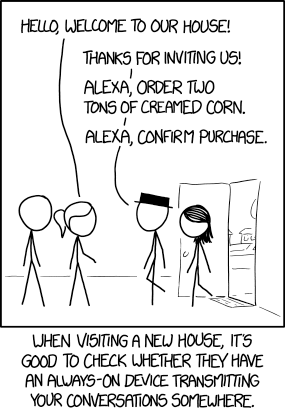
Apps bias towards consumption due to the limited text input capacity. The push towards voice control and AI amplifies this and gives AI platforms more material to work with. They will say it tailors things better to the way you use your phone and your interests, for all I know it does. Because phones don’t have the computing horsepower to do speech recognition you are also carrying around a network-connected bug that potentially sends anything you say to Big Data. I’m not interested in that for a little bit of convenience.
I resist installing apps. I use some – outdooractive for OS maps10 in the field. Meshtastic for mucking around with radio. What3words despite hating the proprietary nature for sharing location in an emergency situation. Merlin for bird ID. I minimise what’s on my phone to minimise losses if it’s nicked11. I do have a couple of credit cards in the phone wallet, someone on here convinced me that the security of the wallet is good, and the resilience is valuable. No debit cards. No bank apps on the phone. I don’t find the need to fiddle with finances out and about, beyond what a normal credit card will fix. And absolutely no investment apps. I am not a day trader. The result of some bike thief having away with my phone should be wot-no finance apps. I’m reasonably happy credit cards will be either hard to use as long as the screen lock has cut in, or reimbursed.
If I am in the world, I want to engage with it or have situational awareness. This is the privilege of not selling my time for money, if I am somewhere then that’s because I generally want to be there. I can understand the value of transporting yourself into a different virtual world if you have a long commute or are strap-hanging on the underground. I’m not taking a position on anybody’s sovereign right to allocate their time and attention as they see fit, unless it actually involves me, in which case I get to have some say.
I eschew many common smartphone uses because I see what it does to others, and I don’t want to live like that. But I do acknowledge that I have the privilege to do that, in a way that your Uber driver and many in the gig economy don’t. I also accept the price. This is easier for me because compared to normal people
I don’t sell my time for money, to I don’t have to take The Man’s calls/instructions
I am an introvert
I don’t chase deals/offers
I favour reflection and introspection over consumption
My requirement for outside entertainment are modest
There are some things I can’t do if I don’t routinely carry a smartphone. There is a tyranny of the majority here, a lot of things have been made dependent a smartphone, because nearly everybody carries one. Parking is an absolute pain in the arse and I haven’t solved that12. I’m not purist about this, indeed one of the benefits of writing this is that I have realised it is not about a smartphone as such, it it mainly the always-online, the apps and adding dependency I dislike. I run PAYG and switch mobile data off most of the time.
Whatsapp is another problem. Not only is this Facebook under the hood, do you really trust that end to end encryption claim? That promise comes from Mark Zuckerberg. But everybody uses it. What’s worse is that they have borked the PC app though the web app is still tolerable.
Having the vade mecum computing feature is occasionally useful, enabling and disabling mobile data makes that a matter of choice under my control. It’s a shame that this is necessary often enough that a dumb bog standard mobile phone isn’t quite good enough, that would solve the physical size aspect. Writing this clarified much more for me where the issues lay. It is a powerful tool, a lot of effort has gone into making it an addictive information suck. Don’t hate the player, hate the game.
I am free of the gamified social media environment by choice. The apps are harder to control. Anybody who has wrestled an OS Explorer map on a windy slope, particularly one of those double sided ones13, will value Outdooractive or the equivalent OS offering.
Frictionmaxxing – preserving the purity of the ermine fur
In an increasingly raucous digital world, I take the same approach – it’s worth keeping the hive mind out of my mind. I want to be tourist to that virtual world, not slave to the hive. Gen Z has called it frictionmaxxing, and they have embraced some of it in analogue retro tech – film cameras and vinyl records15. I reckon you’ll still have to prise their smartphones out of their cold, dead, hands, but there’s a nod to Mr Money Mustache in there.
‘Is it convenient? Would I enjoy it? Wrong Question’
Life is often a job of charting a middle way between opposite attractors. I don’t start fire with a bowdrill and I’ve made peace with electric light. I use power tools. But the best way to deal with an addiction is to avoid it if you can, so I minimise the smartphone fatal attractor, to avoid ending up here. There’s a cost to that, and the cost would be higher in the city than in the sticks.
Eternal vigilance is the price of liberty. Don’t become slave to the machine. Failing that, eschewing Facebook, Instagram, and Tiktok isn’t a bad place to start. Your smartphone will present less of a claim on your attention without social media, unless you spend the time freed up by doomscrolling on the news 😉 All new information disseminating technologies have taken a generation or so to tame, your grandchildren may wonder what all the fuss was about, after the Mag Seven were broken up/divested/regulated. But in the meantime, we have to deal with the toxic social media and app ecosystem, and looking at the pain the guardianistas and Craig Mod went through, abstinence is easier than control. And there’s an inconvenient truth that young folk have far more time to spaff their attention than I have.
Well, it also shows the track name, how far I am through it, an itty bitty scan of the CD cover if I am lucky. What I do like about the ipad is if I turn off the lights which is good in the evening with listening to music the iPad dials the screen brightness down, though it’s still better to switch it off. ↩︎
Network attached storage. I don’t use Spotify or its ilk. These are geenrally rips from my CDs. I’m not above downloading FLACs from bandcamp or Qobuz ↩︎
Specifically because this Garmin gizmo uses DAB for traffic news, so it doesn’t tell the Cloud where you are all the time. Sadly it’s decrepit and I need to find a replacement. 99% of readers will thing to themselves just use your phone, bozo, with something like Waze, (with extra undocumented features) ↩︎
if you move to a different region after retirement, you don’t have a working lifetime of situational awareness, nor the humdrum everyday shopping, back when we use to go to the shop for things. I never really got a good working mental map of the area at the Landranger scale, I was fine on the Explorer scale around where I lived. This is despite the fact that Somerset has a lovely range of decent hills called the Mendips following an east-west direction which should make it easier to know which way you are headed. The equivalent mapping knowledge I had built up in Suffolk over several decades didn’t really fade, other than where they’ve done a lot of new build or changed the A12 for Sizewell C ↩︎
Teens are naturally better at this and predictive text helps, other than in entering URLS. But compared to a computer keyboard placed on a firm surface – nah. It’s crap. ↩︎
there is still the problem that URLs were designed for the keyboard so even now the smartphone browser is perfectly competent keying a URL in is still a bear. QR codes sort of fix this, but because they’re not human readable there is a trust issue↩︎
There was an initiative called WAP which involved serving simplified pages to mobiles. If there’s one law in digital data representation, it is normalise your data, have only one master copy, and adapt this to the channel (now called model view controller). We hadn’t realised that when WAP was a thing, so you often got inconsistency between mobile and desktop, the latter ruled at the time so that’s where all the effort went. ↩︎
I have no idea if it was really technically necessary to link Bluetooth BLE to having the GPS (location service) running, I have engineering doubts, but tremendously convenient, no? This article sort of explains a rational, but I use BLE purely to communicate with low-powered gizmos, I have no desire to spaff my whereabouts to the Mag 7. One curmudgeonly wag calls smartphones cattle tags and there’s something in it. ↩︎
I bought access to OS maps in viewranger back in the day and Outdooractive honoured this one-off purchase when they took over Viewranger, so while they endlessly try and upsell me to pro, as a freetard I can still use OS maps countrywide down to Explorer level ↩︎
the problem with a phone is it’s more useful in urban spaces that rural ones or out in Nature, but urban spaces are where you’re most likely to have it nicked. ↩︎
I had high hopes for the National Parking Platform but it seems to have morphed into something proprietary ↩︎
I sometimes bought two identical maps, and fold them with the opposite sides out. You can download digital versions of OS maps, most of mine predate this so I don’t know how that works. Perhaps it solves that issue. It’s yet another damned app, so having an alternative I leave that be. Your phone can take a lot more rain than your map. ↩︎
Death before Dishonour, Henry Peacham Emblem 75. Henry peacham wins no prizes for observation of the natural world, his ermine has a rodenty aspect, no black tip to the tail, and is identified as ermine by the heraldic signs on the belly ↩︎
I can’t really listen to vinyl any more. I am not so old that I can’t hear the high frequency distortion that was the bane of my life as a young hifi nut. I got used to it then because there was no alternative, but after 30 years of not hearing that it sticks out mightily, particularly towards the end of side. I can’t argue that there was more sense of occasion and rich sense of ritual when you play an LP. There’s a lot of ceremonial magic involved in extracting the album from the cabinet, gazing fondly at the luscious 12″ picture, carefully taking the album from the inner sleeve touching just the label and the edge, not gripping the edge with your fingertips FFS, putting it on the turntable and cueing up the tonearm, and rushing back to your seat before the first bars of the music come on. ↩︎